
Anti-Serpin-B9 Rabbit Polyclonal Antibody
- Host
- Rabbit, Polyclonal
- Reactivity
- Validated- Human Potential-Mouse, Rat, Pan, Monkey, Dog
- UniProt
- P50453
- Size
- 100ug
- Cat. #
- RP2SerpinB9
In stock
- SKU
- RP-SerpinB9
Target Overview
Serpin-B9 (UniProt P50453), also known as peptidase inhibitor 9 (PI-9) or cytoplasmic antiproteinase 3 (CAP-3), is a 376-amino acid member of the serpin superfamily of serine protease inhibitors. Unlike most serpins that are secreted, Serpin-B9 is localized to the cytoplasm where it functions as the principal endogenous inhibitor of granzyme B, a serine protease delivered by cytotoxic T lymphocytes and natural killer cells to induce apoptosis in target cells. By forming a tight, irreversible complex with granzyme B, Serpin-B9 protects cells from granzyme B-mediated cytotoxicity. This protective function is particularly relevant in immune-privileged sites, activated lymphocytes, and cells of the innate immune system where controlled resistance to granzyme B is required. Dysregulated Serpin-B9 expression has been documented in malignancies where tumor cells exploit this inhibitor to evade immune surveillance. The protein is expressed at varying levels across immune cell populations, with particularly high expression in dendritic cells, macrophages, and activated T cells.
Background
References
- Greier MDC et al (2026) Granzyme B, HIF-1α, VEGFA and SerpinB9 in the local tumour immune system of immune-stimulated slice cultures of head and neck cancer. BMC Cancer. PubMed · 10.1186/s12885-026-16282-x
- Zhang K et al (2026) Repurposing Azilsartan medoxomil attenuates periodontitis by targeting SERPINB9 to promote apoptosis of IL1B(+) macrophages. Int Immunopharmacol. PubMed · 10.1016/j.intimp.2026.116523
- Huang X et al (2025) SerpinB9 sustains CIITA to orchestrate MHC-II expression and Th1 differentiation in β-glucan-induced macrophages. Immunol Res. PubMed · 10.1007/s12026-025-09715-5
- Yang H et al (2025) Targeting spermine metabolism to overcome immunotherapy resistance in pancreatic cancer. Nat Commun. PubMed · 10.1038/s41467-025-63146-2
- Han R et al (2025) Biomimetic self-assembly nanoparticles inhibit serpinB9 and synergistically enhance COD-induced ferroptosis for cancer therapy. Mater Today Bio. PubMed · 10.1016/j.mtbio.2025.101982
Additional Specifications
| Gene Symbol | SerpinB9 |
|---|---|
| UniProt ID | P50453 |
| Host Species | Rabbit |
| Species Reactivity | Validated- Human Potential-Mouse, Rat, Pan, Monkey, Dog |
| Pack Size | 100ug |
| Immunogen (Amino end mature Serpin-B9) | Immunogen is proprietary and confidential. Immunogen generated in amino acid region 1-51. |
| Immunogen (Reactive Center Loop (RCL)) | Immunogen is proprietary and confidential. Immunogen generated in amino acid region 331-371. |
| Alternate Names | SERPINB9, Serpin B9, Peptidase inhibitor 9, PI-9, PI9, Cytoplasmic antiproteinase 3, CAP-3, CAP3 |
Frequently Asked Questions
What molecular weight should I expect for Serpin-B9 on a Western blot?
Serpin-B9 migrates at approximately 42 kDa on SDS-PAGE, close to its predicted molecular weight of 42.5 kDa based on the 376-amino acid sequence. The protein is cytoplasmic and lacks a signal peptide or post-translational glycosylation sites, so you should see a single, discrete band in most cell lysates. In immune cells expressing high levels of Serpin-B9—such as activated T cells, NK cells, or dendritic cells—the band intensity will be substantially stronger than in non-lymphoid tissues where basal expression is lower.
What dilution should I start with for Western blot with this Serpin-B9 antibody?
We recommend starting at 1:1000 dilution for Western blot, which has been validated with this rabbit polyclonal. Depending on Serpin-B9 expression levels in your sample, you may optimize between 1:500 and 1:2000. Immune cells and lymphoid tissues typically require less antibody due to higher endogenous Serpin-B9 levels. Use standard blocking conditions with five percent non-fat dry milk or BSA in TBST, and incubate primary antibody overnight at four degrees Celsius for best signal-to-noise ratio.
Does this antibody cross-react with mouse and rat Serpin-B9?
Cross-reactivity with mouse and rat Serpin-B9 is predicted based on sequence homology but not yet validated in our hands. Human Serpin-B9 shares approximately 70 percent identity with mouse Serpin-9 (the ortholog), with conservation concentrated in the reactive center loop and core serpin domain. If you are working with rodent samples, we recommend running positive controls—such as mouse splenocytes or activated T cells—alongside your experimental lysates and verifying that the band appears at the expected 42 kDa molecular weight before drawing conclusions.
What cell types or tissues should I use as positive controls for Serpin-B9?
Activated cytotoxic T lymphocytes, natural killer cells, and dendritic cells are excellent positive controls because they express high levels of Serpin-B9 to protect themselves from granzyme B during immune responses. Human spleen, lymph node, or PBMCs stimulated with PMA and ionomycin for 24 to 48 hours work well. Testis and placenta also show moderate constitutive expression due to immune-privileged status. Avoid using fibroblasts or epithelial cell lines as sole controls; Serpin-B9 is often low or undetectable in these unless cells are stressed or transformed.
Can this antibody detect the Serpin-B9 granzyme B complex or only free Serpin-B9?
This antibody recognizes Serpin-B9 regardless of whether it is free or complexed with granzyme B, since the epitope lies outside the reactive center loop that undergoes cleavage during inhibition. When Serpin-B9 binds granzyme B, it forms a stable, covalent complex of approximately 70 kDa that can be detected on non-reducing gels. Under standard reducing conditions, you will primarily detect the 42 kDa monomeric form. If you are interested in tracking inhibitory activity, consider running samples under non-reducing conditions to visualize complex formation.
How should I prepare cytoplasmic lysates to preserve Serpin-B9 signal?
Because Serpin-B9 is strictly cytoplasmic, standard RIPA or NP-40 lysis buffers work well; avoid protocols that isolate nuclei and discard cytoplasm. Include protease inhibitors to prevent degradation, particularly if your cells co-express granzyme B. Lyse cells on ice, clarify by centrifugation at 15,000 times g for ten minutes, and quantify protein immediately. Serpin-B9 is stable through freeze-thaw cycles, but we recommend aliquoting lysates to minimize repeated thawing. Boil samples in reducing sample buffer for five minutes before loading.
What is the recommended storage condition for this Serpin-B9 antibody?
Store the antibody at minus twenty degrees Celsius as supplied. For routine use, we recommend preparing small working aliquots in sterile tubes to avoid repeated freeze-thaw cycles, which can reduce titer over time. The antibody is supplied at 100 micrograms in a glycerol-containing buffer that remains liquid at minus twenty degrees, so you can remove aliquots without fully thawing the stock. Once thawed, working aliquots can be held at four degrees Celsius for up to one month. Do not store diluted antibody; prepare fresh working dilutions for each experiment.
Is this antibody suitable for detecting Serpin-B9 upregulation in cancer cell lines?
Yes, many cancer cell lines upregulate Serpin-B9 as an immune evasion mechanism to resist granzyme B-mediated killing by tumor-infiltrating lymphocytes. This antibody is well suited for comparing Serpin-B9 levels between normal and transformed cells, or for monitoring induction after interferon-gamma treatment, which strongly upregulates Serpin-B9 transcription. Lymphomas, melanomas, and some carcinomas show particularly high expression. Include an untreated or non-malignant control cell line in parallel to confirm specificity and assess fold-change, since basal expression varies widely across lineages.
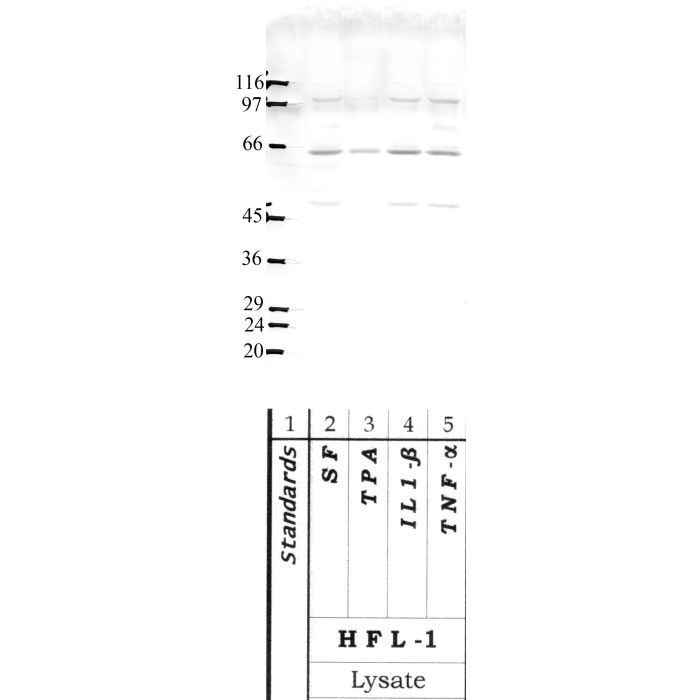
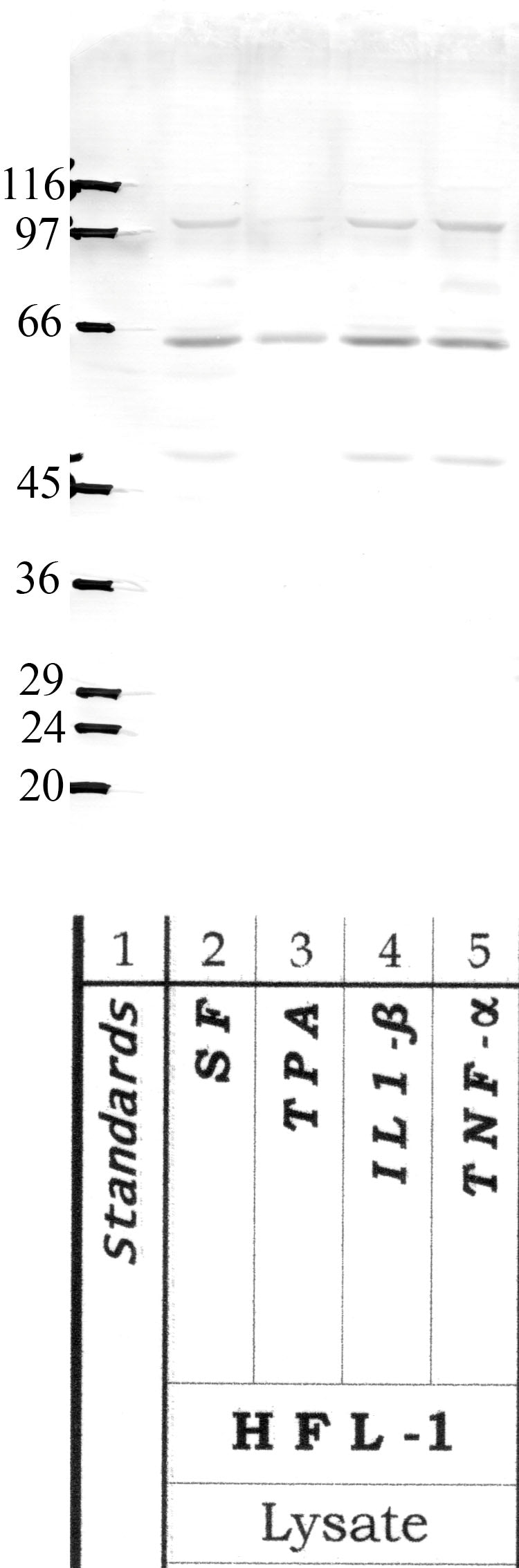
Western blot validation for RP-SerpinB9 — 1 panel across the domain-specific antibody variants. Each blot below shows the clone that validates a specific domain of the target protein.
Custom validation studies available on request — contact us.
Also known as:
- SERPINB9
- Serpin B9
- Peptidase inhibitor 9
- PI-9
- PI9
- Cytoplasmic antiproteinase 3
- CAP-3
- CAP3